Tasks and benefits
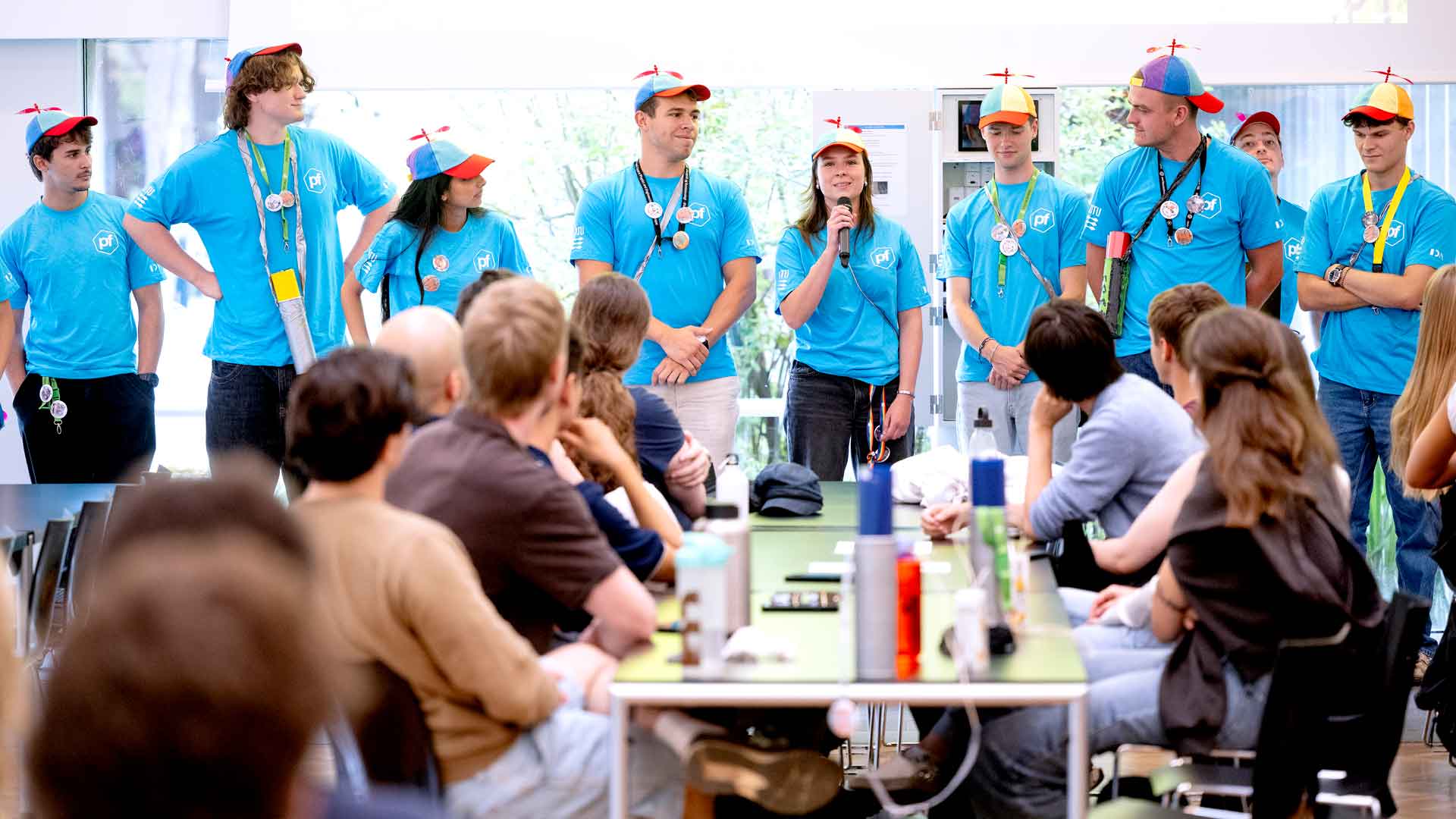
As a Vector, you help give new Bachelor of Science in Engineering and Bachelor of Engineering students the best possible start at DTU. It’s an experience that gives you friends, experience, and skills you can use for the rest of your life.
As a vector, you are a key player in the study start at DTU. You help new students settle in, foster a sense of community, and ensure that the introduction days are both fun and safe.
Your tasks as a vector:
- Develop, plan, and help carry out the introduction days for new students at DTU.
- Welcome new students to your study programme.
- Be the 'go-to' person for new students and answer questions about both DTU and your study programme.
- Follow a small group of new students, a 'cake team,' throughout their first semester.
- Network
You will get to know people from various study programmes and classes. You become part of a strong team that you can rely on both socially and academically in the future.
- Skills
You gain experience in planning and project-managing events. You will be trained in various areas, including presentation techniques, group dynamics, conflict management, and first aid. These skills prepare you for your role as a Vector and can also be used throughout your studies and future working life.
- Experiences
You are invited to the DTU Intro Party together with the other vectors, KABS, and the new students. You will participate in social events and create memories that last a lifetime.
- Honorarium
As a vector in the Bachelor of Science in Engineering and Bachelor of Engineering study start, you will receive an honorarium of DKK 4,000.
- Vector diploma
You will receive a special Vector diploma recognizing the skills you have gained through your work as a vector. You can use the diploma as documentation of your skills in your continued studies and professional life.
About the education days for vectors
The education days are organised by the Study Guidance and KABS. It consists of lectures and workshops with external speakers, KABS and DTU staff. You will learn about, among other things:
- Effective presentation techniques
- Group dynamics and conflict resolution
- Diversity and inclusion
- Prevention and handling of offensive behaviour
- Life-saving first aid and tools to create calm and safety in larger groups.